Kreutz wrote:Yes yes, I'm aware of the principles this nation was founded on....classic case of theory vs practice. In reality, this government has
frightening firepower and has shown its willingness to use it at home and abroad.
I'll keep my mouth shut, the militia types are free to get themselves cluster-bombed if they wish.
Edit:
George Washington never had to plan for one of these paying a visit to Vally Forge:
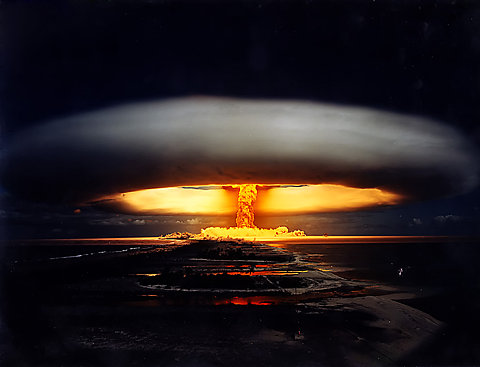
The asymmetry of force between say, the militia (already forgot its name) in this thread (the small % that aren't feds and even smaller % that would fight) and the government means the citizenry simply have no chance. Trust me, its best to shut up, pay your taxes, and MYOB.
The immorality of the people and their government has consequences. Those consequences ultimately destroy the previous state. It the people have a change of heart it usually leads to revolution, otherwise it usually ends in collapse. What comes after the collapse depends on a lot of things.
Have you forgotten the lessons of Iraq and Afghanistan so quickly? Asymmetric forces are very dangerous to the conventional military...particularly when supported by the populous. As for the absurd suggestion of a nuke...the weapons power and the resulting horror is ultimately its undoing. Neither a government, nor a militia could ever use a nuke and remain legit. Please note that I'm not saying that someone wouldn't be stupid enough to use one (even that's a really big assumption), but rather that the use of one is the fastest way to loose that fictional future war.
Asymmetric wars are a b*tch by definition! Mix combatants and civilians in the war zone and you have serious trouble...toss in your industrial base and it's hell. It's quiet possible for either side to win.
It's a very American fallacy to view war as mostly a function of tools. Wars are fought with tools, but they are won by people. Big, cool, expensive tools can help you, but they can't win the contest anymore than a $5k race gun will win you the next shooting competition.
The problem with revolutions is that they are only apparent after the fact. Knowing that 1776 occurred, it is very easy to read material from the two decades previous (including an interesting sermon by Johnathan Mayhew:
http://www.lawandliberty.org/mayhew.htm) and see it coming. In order for a revolution to be successful the hearts and minds of the people need to change first, then all more reasonable courses of action need to be exhausted. Only then is a revolution likely. Only then can it get the support it needs to win.
Again, the problem isn't knowing after the fact what caused these changes, but rather noticing them as they occur. The end product, revolution, often culminates quickly, but it was a long time coming. You are correct in stating that the percentage of people willing to fight a revolution (which isn't what the militia is about in the first place, but I digress) since the last attempt (the Civil War) is probably very small. However, that's the problem with hypotheticals. It's easy to talk big and then cower when the real deal happens...but it also goes the other way, particularly in real revolutions.
Real revolutions are not riots.


 Interesting post. It should be noted that you post quoted zephyp but I believe wylde007 said it. I would like to know more about VCM. You mentioned training once a month. Who trains you? How well organized are you? Large numbers or small numbers? Rank system?
 ) although incredibly versed on an important time in our nations history, can only sing one song. Take a look, 5 pages and we are finally back on track.


 Like i said this getting interesting


